





For years, Johnson & Johnson’s earnings story was a pharmaceutical story with a device business attached. Investors read the immunology and oncology lines first and treated surgery and cardiology as supporting cast.
That ordering is getting harder to defend. As the company’s largest drug franchise faces biosimilar competition, the MedTech segment is increasingly where upside surprises come from, and its cardiovascular businesses are doing most of the lifting. The reasons are structural, and so are the risks.

Why the Spotlight Moved
The simplest explanation starts with Stelara. When a blockbuster immunology drug loses exclusivity and cheaper biosimilars arrive, the revenue decline is mechanical and large. J&J has other fast-growing medicines in oncology and immunology, but replacing a franchise of that size takes several launches growing at once. A pharma segment can post strong growth in its newer products and still look sluggish on the top line.
That arithmetic changes what a quarterly beat means. When the drug side is absorbing a known headwind, a beat is more likely to come from somewhere that is growing without caveats. Medical devices fit, because procedure volumes tend to move steadily and the products used in those procedures get replaced with every case.
Cardiovascular Does the Heavy Lifting
J&J spent heavily to build its cardiovascular position. The Abiomed acquisition brought the Impella heart pump, used to support patients during high-risk cardiac procedures and heart failure events. The later purchase of Shockwave Medical added intravascular lithotripsy, a technique that uses sound waves to break up calcified plaque in arteries. Both are single-use, procedure-linked products, which is the kind of revenue profile device investors prize.
Both also sit in categories where clinical adoption is still spreading. Calcified arteries are a common obstacle in cardiac interventions, and a tool that makes those cases more predictable gets used more often once physicians trust it. That is how a growth curve gets built inside a large company: not through a single splashy launch, but through steady uptake in hospitals that already own the relationship.
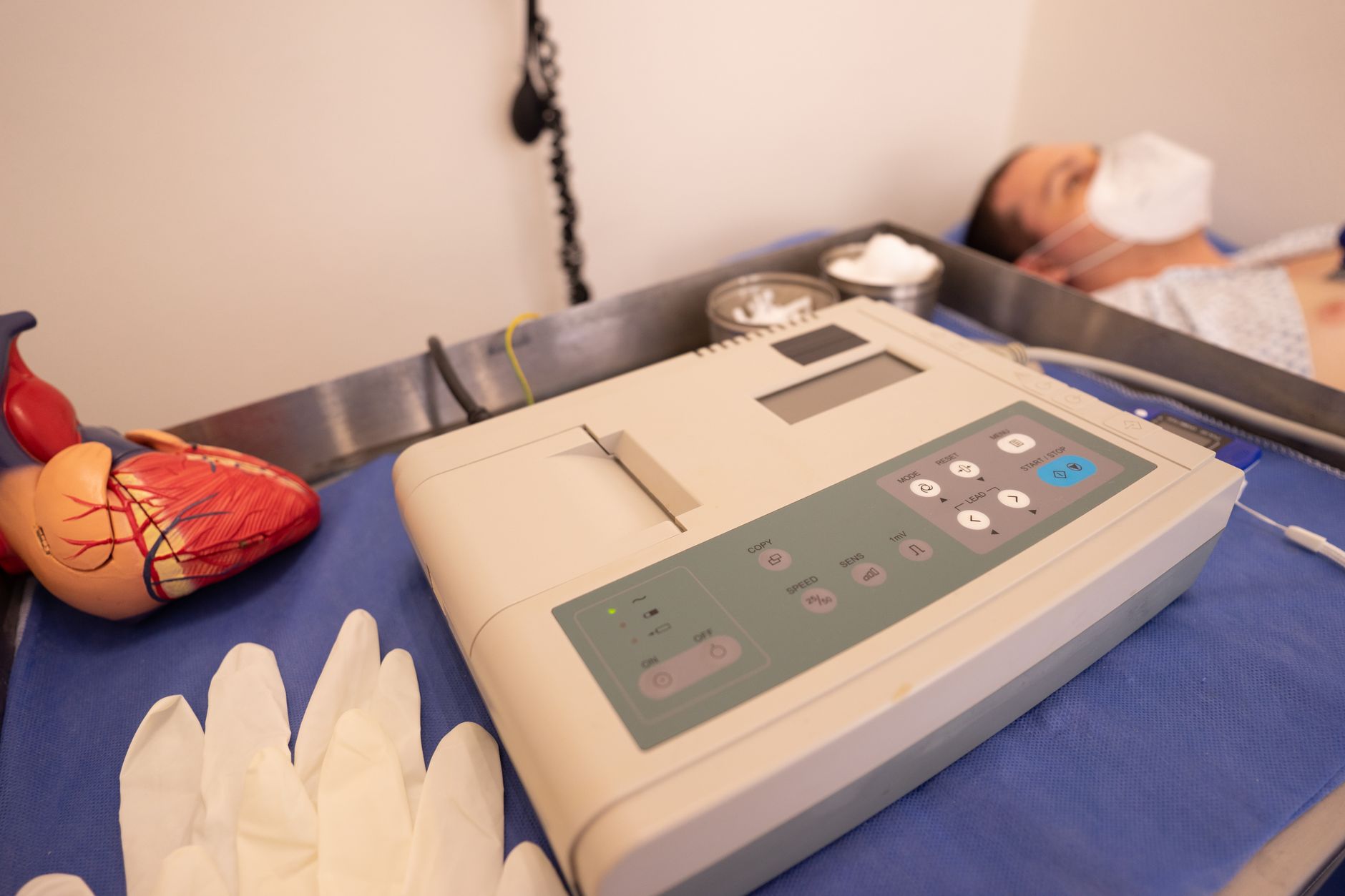
Electrophysiology, the treatment of heart rhythm disorders, is the third leg, and it is the most contested. J&J’s Biosense Webster unit has long been a leader in the mapping systems that guide catheter ablation. The industry shift toward pulsed field ablation, which uses electrical pulses rather than heat or cold, has made the segment a fight. Boston Scientific moved quickly with its own pulsed field system, and J&J’s Varipulse catheter had a brief pause in US use after safety reports before resuming.
That episode matters for how to read the segment. A business can beat expectations while a flagship product stumbles, but only if other parts are strong enough to absorb it. Cardiovascular has been able to do that so far. It is also why the cardiovascular thesis rests on several products rather than one.
The Parts That Still Drag
Not every corner of MedTech is pulling its weight. Orthopaedics, the legacy core of the device business, is a mature market with steady but unspectacular growth. J&J has announced plans to separate its DePuy Synthes orthopaedics unit, a signal that management sees the portfolio as stronger with that business set apart. Whatever the strategic logic, it means the part of MedTech with the slowest growth will eventually stop diluting the rest.
Other pressures are less visible in the headlines. Pricing policies in China, where volume-based procurement squeezes device prices, affect the whole industry, and tariffs add cost uncertainty to supply chains that cross borders. J&J’s size gives it room to absorb these, but they show up in margins before they show up in sales.
What Investors Should Watch
The first test is whether the cardiovascular momentum can last once the comparisons get harder. Acquired businesses grow fastest in the years right after a deal, when J&J’s sales force and hospital contracts open doors the original companies could not. Eventually that tailwind fades, and the growth has to come from the products themselves.
The second is surgical robotics. J&J’s Ottava system is designed to compete with the dominant soft-tissue robot in operating rooms, and the company has spent years building toward it, alongside its Monarch platform for endoscopy and the Velys system in orthopaedics. Until Ottava reaches the market at scale, it counts as an investment line rather than an earnings driver, and it competes for capital against a cardiovascular business that is already paying back.
A beat that depends on a few cardiovascular franchises is only as durable as the weakest of them, and one of them has already had to hit pause.