





A cloud business that makes its money renting out servers is now spending its profits on redesigning what goes inside them. That is the quiet logic behind Amazon’s push into custom silicon. Graviton processors, Trainium training chips and Inferentia inference chips are often discussed as technology stories, but they are better understood as a capital allocation decision made possible by the earnings of Amazon Web Services.
The sequence matters. AWS built a high-margin business first, then used its cash flow to take on one of the most expensive engineering projects in computing: designing chips that compete, at least partly, with the products of its own suppliers. Each earnings report that shows AWS growing and staying profitable strengthens the case for continuing to do it.

The Profit Engine Underneath the Chip Program
Amazon’s retail operation moves enormous volume on thin margins, with the costs of warehouses, shipping and labor absorbing most of what it earns. AWS works differently. Once a data center is built and filled with hardware, customers pay for compute, storage and database services month after month, and the incremental cost of serving them is low compared with what they pay. That gap is why AWS has long contributed a disproportionate share of Amazon’s operating income relative to its share of revenue.
Custom chips are a way of widening that gap. Every server AWS buys from an outside vendor carries that vendor’s profit margin, which AWS then has to recover in the price it charges customers. When AWS designs the processor itself, it pays a foundry to manufacture the chip and keeps the design premium in-house. The savings can be passed on as lower prices, kept as margin, or split between the two, and AWS gets to choose the mix workload by workload.
The foundation for this was laid years ago. Amazon acquired the Israeli chip designer Annapurna Labs in 2015, and that team went on to build the Nitro system, which offloads networking and security tasks from the main processor, followed by the Arm-based Graviton line. Those early projects were modest compared with an AI accelerator, but they gave Amazon in-house experience in chip design, validation and large-scale deployment. Trainium and Inferentia are the same playbook applied to a far bigger and more contested market.
Why Build When You Can Buy
The short answer is that AI hardware is scarce and expensive, and the largest buyers of it have little control over price or supply.
Nvidia’s GPUs remain the default for training large models, and demand for them has given Nvidia pricing power that cloud providers would like to dilute. A hyperscaler that controls a credible alternative can negotiate from a stronger position, even if most of its customers still ask for Nvidia by name. Custom silicon also lets AWS tune chips, networking and software together for the workloads its customers actually run, a level of integration that off-the-shelf parts cannot match.
The Economics of Selling a Cheaper Chip
The strategy only works if customers adopt the chips, and adoption is where the economics get difficult. Training a frontier model on Trainium requires software that speaks AWS’s Neuron toolchain rather than Nvidia’s CUDA, which most AI engineers have spent years learning. That friction is real, and AWS has to offset it with price. The pitch is straightforward: if a customer can get comparable performance per dollar and is willing to do the porting work, the savings accumulate across thousands of chips running for months.
This is where AWS’s profits become a strategic weapon rather than just a financial result. A smaller competitor would struggle to subsidize a chip program that may take years to pay off, and AWS can absorb the design costs, the early underutilization and the engineering support needed to win over skeptical customers. Its investment in Anthropic fits the same pattern. A large AI lab committed to training on Trainium gives Amazon a showcase workload, a feedback loop for the next chip generation and proof for other customers that the hardware can handle serious models.
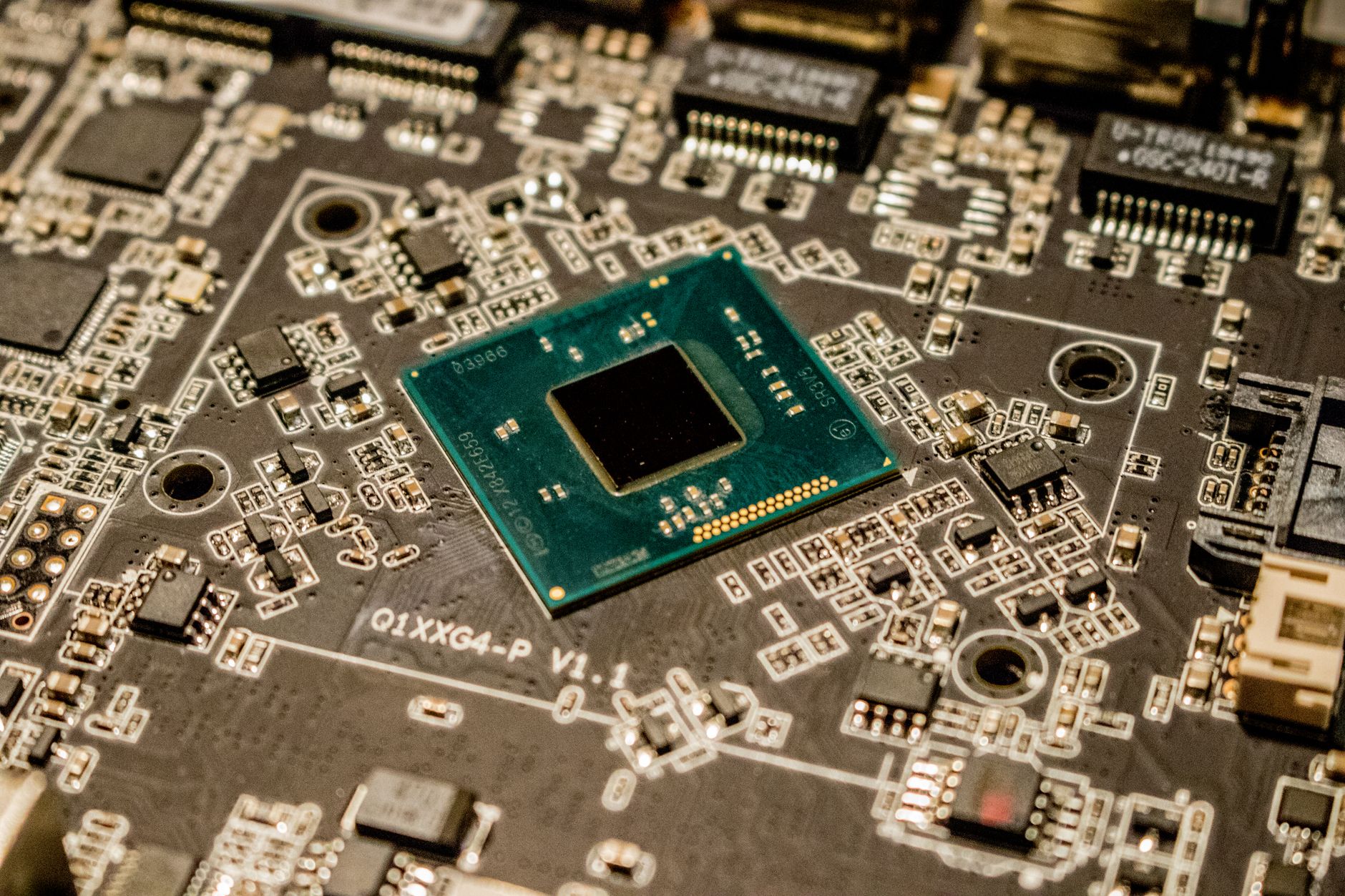
There is also a defensive logic that has little to do with Nvidia. Cloud customers who build their applications around Graviton or Trainium are harder to move to a rival provider, because workloads tuned to one company’s silicon do not transfer cleanly to another’s. Lower prices attract the customer, and the engineering investment the customer makes afterward keeps them in place. For a business that depends on recurring revenue, that stickiness may be worth as much as the direct cost savings.
None of this makes the chip program risk-free. Design cycles are long, a misjudged architecture can leave AWS with silicon that is cheap but unwanted, and Nvidia keeps raising the performance bar. AWS also continues to offer Nvidia’s GPUs prominently to its customers, an acknowledgment that most developers will choose the tool they already know. The custom chips have to earn their place one workload at a time, and each Trainium customer who finishes a migration has to rewrite code that already worked.