





Solar panel manufacturing stocks rocketed to new highs this week after Congress extended federal tax credits for renewable energy installations through 2032. The Invesco Solar ETF jumped 12% in three trading sessions, while individual manufacturers like First Solar and SunPower saw gains exceeding 15%.
The extension removes uncertainty that had been weighing on the sector since mid-2024. Previously, the Investment Tax Credit was set to step down from 30% to 26% in 2033, then fall to 22% before expiring entirely. Now investors can count on stable government support for nearly a decade.
“This gives us the runway we needed,” said Sarah Martinez, portfolio manager at Green Energy Capital. “Manufacturing companies can plan long-term expansions knowing demand will remain robust.”
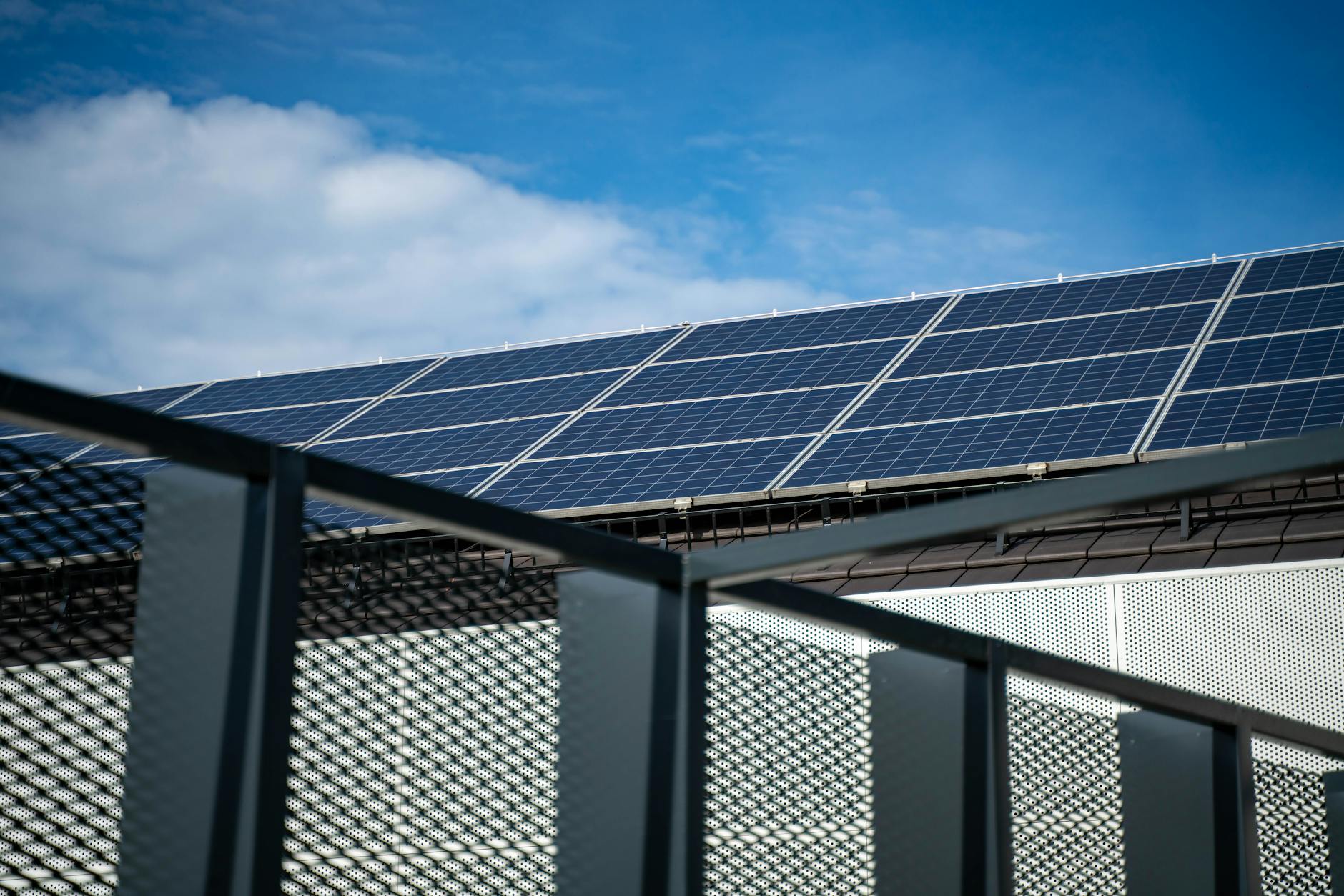
Policy Certainty Drives Manufacturing Expansion
The tax credit extension addresses a fundamental challenge facing solar manufacturers: the boom-bust cycle created by policy uncertainty. When credits were set to expire in previous years, installations surged ahead of deadlines, then crashed afterward. This volatility made it difficult for companies to maintain steady production and employment levels.
First Solar announced plans to expand its Ohio manufacturing facility within hours of the legislation passing. The company expects to add 2,000 jobs over the next 18 months, bringing total capacity to 3.3 gigawatts annually. CEO Mark Widmar told analysts the extension “fundamentally changes our capital allocation strategy.”
Enphase Energy, which produces microinverters essential for residential solar installations, saw its stock climb 18% on heavy volume. The company had delayed a planned Texas facility expansion pending policy clarity. Now those plans are moving forward with groundbreaking scheduled for spring 2025.
Manufacturing stocks are benefiting from a perfect storm of favorable conditions. Beyond the tax credit extension, the CHIPS and Science Act provides additional incentives for domestic semiconductor production used in solar equipment. Meanwhile, tariffs on Chinese panels remain in place, protecting domestic manufacturers from low-cost competition.
Supply Chain Reshoring Accelerates Investment
The policy stability comes as solar companies accelerate efforts to build domestic supply chains. Chinese manufacturers still dominate global production, but American companies are gaining ground in specialized segments like high-efficiency panels and energy storage systems.
Hanwha Q CELLS expanded its Georgia manufacturing plant to 1.7 gigawatts of annual capacity, making it one of the largest solar facilities in the United States. The Korean-owned company benefits from both federal tax credits and state incentives, creating a compelling cost structure for domestic production.
“We’re seeing a fundamental shift in how companies think about supply chain risk,” said David Chen, senior analyst at Energy Transition Research. “The combination of policy support and geopolitical tensions is driving real investment in American manufacturing.”

Tesla’s solar roof business, while smaller than traditional panel manufacturers, also stands to benefit from the extension. The company has struggled with production scaling and installation challenges, but stable tax credits could help justify continued investment in the technology. Tesla shares gained 8% following the announcement, though solar represents a small fraction of the company’s revenue.
The manufacturing surge extends beyond panels to supporting equipment. Power electronics companies like SolarEdge and inverter manufacturers are expanding capacity to meet expected demand growth. These companies often have higher margins than panel manufacturers, making them attractive to growth-oriented investors.
Regional manufacturers are also benefiting. Silfab Solar, which produces panels in Washington state, announced a second facility in South Carolina. The company targets premium residential installations where customers value domestic production and shorter delivery times.
Market Dynamics Favor Established Players
While the tax credit extension benefits the entire solar sector, established manufacturers with existing production capacity are best positioned to capitalize immediately. Smaller companies and startups still face challenges accessing capital and scaling production, even with favorable policies.
First Solar’s technology advantage in thin-film panels gives it particular strength in utility-scale projects. The company’s panels perform better in high-temperature conditions common in southwestern utility installations. With the tax credit extension, utilities can commit to long-term purchasing agreements that justify First Solar’s premium pricing.
SunPower focuses on high-efficiency panels for residential installations. The company’s integrated approach, handling both manufacturing and installation, creates opportunities to capture more value from each project. However, SunPower faces execution challenges that have pressured margins in recent quarters.
The extension also benefits companies throughout the solar value chain. Much like how renewable energy infrastructure trusts have outperformed traditional REITs, solar-focused investment vehicles are attracting increased capital flows as institutional investors seek exposure to the growing sector.
Module manufacturers aren’t the only winners. Companies producing polysilicon, the raw material for most solar cells, expect increased demand as domestic panel production ramps up. REC Silicon, which mothballed its Washington state facility during the trade war with China, is evaluating reopening the plant.

Long-Term Growth Trajectory Remains Strong
The tax credit extension provides near-term certainty, but solar manufacturing stocks face longer-term questions about competitiveness without government support. Chinese manufacturers continue advancing their technology while maintaining cost advantages through scale and vertical integration.
American companies are betting on innovation to maintain relevance. Next-generation technologies like perovskite tandem cells promise higher efficiencies, while manufacturing automation could reduce labor cost disadvantages. The key question is whether eight years of policy stability provides enough time to achieve cost parity.
Energy storage integration represents another growth avenue for solar manufacturers. As battery costs decline and grid storage becomes economical, companies that can offer integrated solar-plus-storage solutions may command premium valuations. Tesla and Enphase are already moving in this direction.
The manufacturing boom also depends on continued installation growth. Residential solar adoption has accelerated, but utility-scale projects face permitting delays and transmission constraints. Policy support for manufacturing means little without corresponding demand growth.
Looking ahead, solar manufacturing stocks offer exposure to America’s energy transition while benefiting from protective trade policies. The tax credit extension removes a major uncertainty, but investors should monitor execution as companies scale production rapidly. The next decade will determine whether domestic solar manufacturing becomes permanently competitive or remains dependent on government support.
Frequently Asked Questions
Which solar stocks benefited most from the tax credit extension?
First Solar and SunPower saw the largest gains, jumping 15-18% as they announced major facility expansions.
How long do the extended solar tax credits last?
The federal Investment Tax Credit for solar installations is now extended through 2032 at current rates.