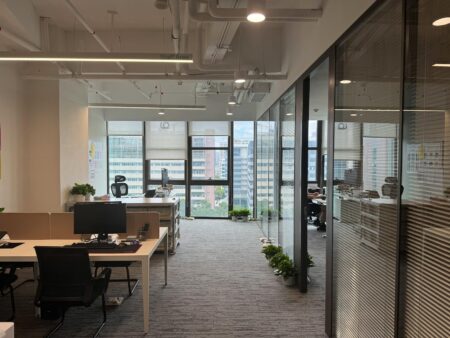





Commercial real estate markets are experiencing their strongest surge in four years as major corporations abandon flexible work policies and mandate employee returns to physical offices. After three years of remote work uncertainty that left office buildings partially empty, property values in key business districts are climbing as companies lock in long-term leases and expand their footprints.
The shift represents a dramatic reversal from 2020-2022, when many analysts predicted the death of traditional office space. Instead, corporate executives are betting big on in-person collaboration, driving demand that’s pushing commercial property values up across major metropolitan areas. Real estate investment trusts focused on office properties have seen their stock prices recover significantly, with some posting double-digit gains as occupancy rates climb back toward pre-pandemic levels.
Corporate Giants Lead the Charge Back to Offices
Major corporations are implementing strict return-to-office policies that require employees to be physically present multiple days per week. Amazon has mandated five days in-office starting January 2024, while JPMorgan Chase, Goldman Sachs, and Tesla have all implemented similar requirements. These moves are translating directly into increased real estate demand.
Meta expanded its office footprint in several cities despite earlier downsizing plans, while Google signed new leases in Austin and New York. Apple continues investing heavily in its campus locations, and Netflix recently committed to additional space in Los Angeles. These tech giants, once champions of remote work flexibility, now view physical proximity as essential for innovation and company culture.
The mandate trend extends beyond tech. Financial services firms like Morgan Stanley and Bank of America have reinforced in-person requirements, with some tying office attendance to performance reviews and promotion eligibility. Consulting firms including McKinsey and Deloitte emphasize client-facing work requires physical presence, driving demand for premium office space in city centers.
Manufacturing companies are also expanding their corporate headquarters. General Motors recently announced plans for a new downtown Detroit campus, while Ford is investing in office space across multiple markets. These moves signal confidence in long-term office real estate value, contradicting earlier predictions of permanent remote work adoption.
Property Values Respond to Increased Demand
Commercial real estate values in prime markets are reflecting this corporate commitment to physical workspace. Manhattan office properties have seen rental rates stabilize after steep declines, with Class A buildings commanding premium pricing. Seattle’s South Lake Union district, home to Amazon’s headquarters, is experiencing renewed leasing activity as the company expands its presence.
Real estate investment trusts specializing in office properties are benefiting significantly. Boston Properties, which owns premier office buildings in major markets, has reported improved occupancy rates and rental income. SL Green Realty, Manhattan’s largest office landlord, is seeing increased tenant interest and longer lease commitments.
Regional markets are also experiencing growth. Austin’s office market, bolstered by tech company expansion, shows strong absorption rates. Miami’s financial district is attracting firms relocating from higher-cost markets, driving up property values. Even secondary markets like Nashville and Denver are seeing increased corporate real estate activity as companies establish satellite offices.

The recovery isn’t uniform across all property types. Older office buildings lacking modern amenities struggle to attract tenants, while properties with advanced technology infrastructure, wellness features, and flexible spaces command premium rates. This quality divide is creating opportunities for real estate developers to modernize existing properties or develop new facilities that meet evolving corporate needs.
Investment Opportunities in Commercial Real Estate
Smart money is flowing into commercial real estate as investors recognize the trend’s staying power. Institutional investors are increasing allocations to office properties in prime locations, betting that corporate return-to-office mandates will sustain demand. Pension funds and sovereign wealth funds are particularly active in acquiring trophy assets in gateway cities.
Real estate private equity firms are targeting value-add opportunities, purchasing older office buildings for renovation and repositioning. These strategies capitalize on the quality gap in the market, transforming outdated properties into modern workspaces that command higher rents. The approach mirrors successful strategies used in the residential sector but applied to commercial properties.
Public market opportunities also exist through REITs focused on high-quality office properties. These companies offer exposure to commercial real estate appreciation without the capital requirements of direct property ownership. Many office REITs trade below their net asset value, potentially offering attractive entry points for long-term investors.
Corporate tenant quality has become a crucial investment factor. Properties leased to financially strong companies with long-term commitments offer more stable returns than those dependent on smaller tenants with uncertain futures. This focus on tenant creditworthiness is driving investment toward buildings with blue-chip corporate occupants.
The Broader Economic Impact
The return-to-office trend is creating ripple effects throughout the economy beyond real estate values. Urban retail businesses, restaurants, and service providers are experiencing increased foot traffic as workers return to downtown areas. This renewed activity is supporting local tax bases and municipal budgets that struggled during the remote work period.
Transportation infrastructure is also adapting to increased commuting. Public transit systems are seeing ridership recovery, while parking facilities near office buildings are commanding higher rates. These changes support broader urban economic recovery and make city centers more attractive for continued corporate investment.
The trend aligns with evolving corporate strategies around talent retention and company culture. As businesses focus on comprehensive employee benefit packages to attract top talent, physical workspace quality has become a competitive differentiator. Modern offices with premium amenities help companies demonstrate their commitment to employee experience.
Looking ahead, the commercial real estate recovery appears sustainable as corporate leaders increasingly view physical presence as essential for business success. While hybrid work arrangements remain common, the pendulum has swung decisively toward requiring significant in-office time. This shift is creating lasting value for commercial property owners and investors positioned to capitalize on the trend.
The market dynamics suggest continued strength in high-quality office properties located in major business districts. As companies commit to long-term leases and expand their physical footprints, commercial real estate values should continue their upward trajectory, providing attractive returns for investors who recognized this trend early.
Frequently Asked Questions
Which companies are leading return-to-office mandates?
Amazon, JPMorgan Chase, Goldman Sachs, Tesla, and Meta are among major corporations requiring employees back in offices multiple days per week.
Are all office properties benefiting equally from this trend?
No, modern Class A buildings with premium amenities are commanding higher rents while older properties without modern features struggle to attract tenants.